
The women leading the charge across the LCL Awards network
06 Mar 2026
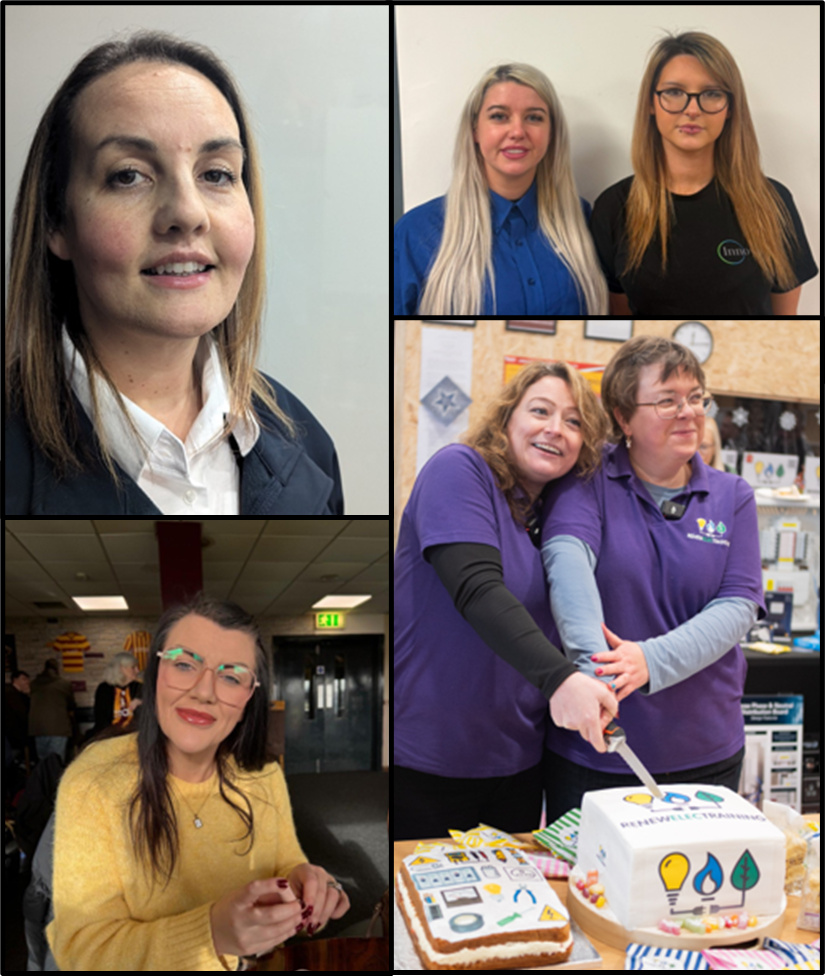
Top left to right: Joanne Kelly, Gas Certification Co. - Jacqui Wilkie, Sureserve & her daughter, Kayla.
Bottom left to right: Lindsay Wilson, Viva Training Services - Sam Lawler & Alex Tranter, RenewElec Training
In celebration of International Women’s Day (8th March), we’re hearing from some of the women running, managing and delivering training across the LCL Awards network. Although still very much in the minority, women in classrooms and leading approved training centres are a visible sign of a sector that is slowly becoming more inclusive and diverse.
There is a shared sentiment, however, that despite changing attitudes, this has not yet translated into a significant increase in female learners. What has shifted is visibility, confidence and conversation – all essential foundations for long term change.
Across our approved network, these women bring varied career paths, deep industry knowledge and a clear commitment to raising standards while supporting the next generation of engineers.
The route to centre management
Joanne Kelly, Centre Manager at Gas Certification Company in Glasgow, spent more than two decades as a servicing and maintenance engineer with British Gas. It was during the Covid pause that she decided to take her career in a new direction, applying for a Technical Advisor role that would ultimately lead to centre management.
“With the support of my Managing Director (Andy McNabb), over the last three and a half years I have progressed to the role of Centre Manager. I’ve got a strong work ethic and attention to detail, and I’m committed to maintaining high standards while supporting both learners and staff to fulfil their potential.”
At Viva Training Services in Halifax, Lindsay Wilson ended up in her role following a less conventional journey. Lindsay’s background spans HMRC, legal recoveries for a global travel firm, commercial operations (including managing a monastery!) and finally, the plumbing and heating sector. Viva Training itself grew out of a boiler installation business, where Lindsay initially worked as the Administration Manager before being promoted to Centre Manager following a change in ownership last year.
“Running a centre is interesting and rewarding. We get a real mix of engineers who’ve been in the industry for decades alongside new entrants of all ages and backgrounds, particularly through our Managed Learning Programme (MLP)."
Jaqui Wilkie, Centre Manager for Sureserve in Glasgow, was made redundant while on a part time gas course and ended up being offered the job as centre manager at the very centre she was training at. She still wanted ‘on the tools’ experience, so after a couple of years went to work with Scottish Gas.
“Once I had built up enough practical knowledge and confidence, I returned to the training sector - I realised I had a real passion for it, helping people develop and see opportunities they might not have thought were available to them.”
Alex Tranter, co owner and trainer RenewElec in Redditch, co founded LCL Awards’ first female owned training centre alongside business partner Sam Lawler after Alex – who was training apprentices at the time - built a strong following on TikTok (18k and counting) through bite size training videos. Both women are experienced electricians and trainers.
“People started asking if I’d deliver courses, so I approached Sam and RenewElec was born!”
While around 20% of their online audience is female, Alex notes that this is not yet reflected on site: “As an industry we’re facing a real skills shortage. We need to be encouraging everyone we can into the sector.”
Navigating a male dominated sector
Working in a traditionally male dominated industry still brings challenges.
Lindsay is open about the assumptions she and her colleagues occasionally face: “We do still encounter the odd bit of sexism – assumptions that we’re just ‘girls in the office’. But we’re extremely knowledgeable and know the courses inside out. Those initial assumptions are usually squashed fairly quickly.”
For Jo, establishing credibility has come through consistency and confidence: “There have been moments where I’ve needed to demonstrate competence more firmly, but being consistent, confident and professional allows you to quickly establish credibility. Capability and experience are what ultimately earn respect.”
Both believe that attitudes are improving. Although the sector remains male dominated numerically, there is growing respect for women in technical and leadership roles, even if progress remains gradual.
Skills shortages and attracting new entrants
A key concern shared across all centres is the widening skills gap. With many experienced engineers retiring and not enough new entrants coming through, the pressure to attract and develop new talent continues to grow.
Enquiries from women are increasing, but we are a long way off from getting anywhere close to equal participation.
Jo believes change must start earlier: “Increasing participation will require earlier engagement, particularly at school and careers advice level, to challenge perceptions about the industry and highlight progression opportunities. We work with schools and careers advisers with the Developing the Young Workforce (DYW) programme from South Lanarkshire, and have recently launched the ‘Ignite Scholarship, created in partnership with The Education Academy Scotland (TEAS) to support and develop the young talent required to sustain a healthy gas industry in our region.”
Lindsay also sees opportunity in emerging areas of the sector: “The newer parts of building services – renewables, for example – tend to attract more diverse groups. Initiatives like Skills Bootcamps are great for encouraging women into green skills and F Gas training.”
Alex highlighted that the trades need a bit of rebrand: “I think generally, people underestimate the opportunities you find within construction. It’s a career that can take you around the world and keep you employed for life.”
And Jacqui mentioned the future-proof nature of the industry: “Engineering is a career that AI can’t replace, which has to be appealing in the current climate. Representation and outreach are crucial.”
Jacqui is very much part of that representation and has helped inspire her own daughter, Kayla, who is currently training to become a Gas Engineer: “I’ve always told her she can do anything she puts her mind to. Not everyone is suited to a purely academic route, and vocational pathways can open incredible doors.”
While Jacqui was studying, she balanced training with parenthood – often involving Kayla in her learning:
“I even read her the LCL Gas Manual as a bedtime story! It genuinely paid off – she probably knows it nearly as well as I do now.”
Now, their shared career path has brought a new dynamic at home: “Our dinner table conversations are more about ventilation calculations and unsafe situations, which always makes me laugh. But seeing her choose this career for herself and embrace it with so much enthusiasm makes me incredibly proud.”
Alex believes that competence ultimately overcomes barriers: “Sam and I haven’t faced negativity from other electricians. We’re gold card, highly experienced and competent. As long as opportunities are there and new entrants are supported, there’s no reason women shouldn’t be just as accepted.”
A final word from Jacqui: “We need to actively promote diverse role models, engage with schools from an earlier stage – at primary level - and clearly communicate that engineering is a viable and rewarding career for everyone. Supportive learning environments also help make the sector more accessible.”
Looking ahead
These women share a clear message: progress is happening, but sustained effort is essential. Earlier engagement, visible role models, inclusive training environments and clear pathways into both traditional and emerging technologies will all play a part in shaping the future workforce.
This International Women’s Day, we celebrate not only the achievements of these women, but their continued commitment to ensuring the building services sector is a place where anyone can succeed.
LCL Awards supports inclusivity
The LCL Awards Inclusivity Charter encourages our approved centres to ensure their centres are welcoming spaces, with flexible training options to support learners from all walks of life. Find out more, here: https://lclawards.co.uk/inclusivity-charter
Top left to right: Joanne Kelly, Gas Certification Co. - Jacqui Wilkie, Sureserve & her daughter, Kayla.
Bottom left to right: Lindsay Wilson, Viva Training Services - Sam Lawler & Alex Tranter, RenewElec Training
In celebration of International Women’s Day (8th March), we’re hearing from some of the women running, managing and delivering training across the LCL Awards network. Although still very much in the minority, women in classrooms and leading approved training centres are a visible sign of a sector that is slowly becoming more inclusive and diverse.
There is a shared sentiment, however, that despite changing attitudes, this has not yet translated into a significant increase in female learners. What has shifted is visibility, confidence and conversation – all essential foundations for long term change.
Across our approved network, these women bring varied career paths, deep industry knowledge and a clear commitment to raising standards while supporting the next generation of engineers.
The route to centre management
Joanne Kelly, Centre Manager at Gas Certification Company in Glasgow, spent more than two decades as a servicing and maintenance engineer with British Gas. It was during the Covid pause that she decided to take her career in a new direction, applying for a Technical Advisor role that would ultimately lead to centre management.
“With the support of my Managing Director (Andy McNabb), over the last three and a half years I have progressed to the role of Centre Manager. I’ve got a strong work ethic and attention to detail, and I’m committed to maintaining high standards while supporting both learners and staff to fulfil their potential.”
At Viva Training Services in Halifax, Lindsay Wilson ended up in her role following a less conventional journey. Lindsay’s background spans HMRC, legal recoveries for a global travel firm, commercial operations (including managing a monastery!) and finally, the plumbing and heating sector. Viva Training itself grew out of a boiler installation business, where Lindsay initially worked as the Administration Manager before being promoted to Centre Manager following a change in ownership last year.
“Running a centre is interesting and rewarding. We get a real mix of engineers who’ve been in the industry for decades alongside new entrants of all ages and backgrounds, particularly through our Managed Learning Programme (MLP)."
Jaqui Wilkie, Centre Manager for Sureserve in Glasgow, was made redundant while on a part time gas course and ended up being offered the job as centre manager at the very centre she was training at. She still wanted ‘on the tools’ experience, so after a couple of years went to work with Scottish Gas.
“Once I had built up enough practical knowledge and confidence, I returned to the training sector - I realised I had a real passion for it, helping people develop and see opportunities they might not have thought were available to them.”
Alex Tranter, co owner and trainer RenewElec in Redditch, co founded LCL Awards’ first female owned training centre alongside business partner Sam Lawler after Alex – who was training apprentices at the time - built a strong following on TikTok (18k and counting) through bite size training videos. Both women are experienced electricians and trainers.
“People started asking if I’d deliver courses, so I approached Sam and RenewElec was born!”
While around 20% of their online audience is female, Alex notes that this is not yet reflected on site: “As an industry we’re facing a real skills shortage. We need to be encouraging everyone we can into the sector.”
Navigating a male dominated sector
Working in a traditionally male dominated industry still brings challenges.
Lindsay is open about the assumptions she and her colleagues occasionally face: “We do still encounter the odd bit of sexism – assumptions that we’re just ‘girls in the office’. But we’re extremely knowledgeable and know the courses inside out. Those initial assumptions are usually squashed fairly quickly.”
For Jo, establishing credibility has come through consistency and confidence: “There have been moments where I’ve needed to demonstrate competence more firmly, but being consistent, confident and professional allows you to quickly establish credibility. Capability and experience are what ultimately earn respect.”
Both believe that attitudes are improving. Although the sector remains male dominated numerically, there is growing respect for women in technical and leadership roles, even if progress remains gradual.
Skills shortages and attracting new entrants
A key concern shared across all centres is the widening skills gap. With many experienced engineers retiring and not enough new entrants coming through, the pressure to attract and develop new talent continues to grow.
Enquiries from women are increasing, but we are a long way off from getting anywhere close to equal participation.
Jo believes change must start earlier: “Increasing participation will require earlier engagement, particularly at school and careers advice level, to challenge perceptions about the industry and highlight progression opportunities. We work with schools and careers advisers with the Developing the Young Workforce (DYW) programme from South Lanarkshire, and have recently launched the ‘Ignite Scholarship, created in partnership with The Education Academy Scotland (TEAS) to support and develop the young talent required to sustain a healthy gas industry in our region.”
Lindsay also sees opportunity in emerging areas of the sector: “The newer parts of building services – renewables, for example – tend to attract more diverse groups. Initiatives like Skills Bootcamps are great for encouraging women into green skills and F Gas training.”
Alex highlighted that the trades need a bit of rebrand: “I think generally, people underestimate the opportunities you find within construction. It’s a career that can take you around the world and keep you employed for life.”
And Jacqui mentioned the future-proof nature of the industry: “Engineering is a career that AI can’t replace, which has to be appealing in the current climate. Representation and outreach are crucial.”
Jacqui is very much part of that representation and has helped inspire her own daughter, Kayla, who is currently training to become a Gas Engineer: “I’ve always told her she can do anything she puts her mind to. Not everyone is suited to a purely academic route, and vocational pathways can open incredible doors.”
While Jacqui was studying, she balanced training with parenthood – often involving Kayla in her learning:
“I even read her the LCL Gas Manual as a bedtime story! It genuinely paid off – she probably knows it nearly as well as I do now.”
Now, their shared career path has brought a new dynamic at home: “Our dinner table conversations are more about ventilation calculations and unsafe situations, which always makes me laugh. But seeing her choose this career for herself and embrace it with so much enthusiasm makes me incredibly proud.”
Alex believes that competence ultimately overcomes barriers: “Sam and I haven’t faced negativity from other electricians. We’re gold card, highly experienced and competent. As long as opportunities are there and new entrants are supported, there’s no reason women shouldn’t be just as accepted.”
A final word from Jacqui: “We need to actively promote diverse role models, engage with schools from an earlier stage – at primary level - and clearly communicate that engineering is a viable and rewarding career for everyone. Supportive learning environments also help make the sector more accessible.”
Looking ahead
These women share a clear message: progress is happening, but sustained effort is essential. Earlier engagement, visible role models, inclusive training environments and clear pathways into both traditional and emerging technologies will all play a part in shaping the future workforce.
This International Women’s Day, we celebrate not only the achievements of these women, but their continued commitment to ensuring the building services sector is a place where anyone can succeed.
LCL Awards supports inclusivity
The LCL Awards Inclusivity Charter encourages our approved centres to ensure their centres are welcoming spaces, with flexible training options to support learners from all walks of life. Find out more, here: https://lclawards.co.uk/inclusivity-charter